Dog routines · Updated October 2026
Why Does My Dog Keep Licking His Paws?
Dogs usually lick their paws because of an injury, allergies, irritation, or — less commonly — anxiety. FuzzNest's first diagnostic split is simple: one paw usually means a local problem like a thorn, foxtail, or sprain; all four paws usually means a whole-body cause such as allergies or yeast.
Is Paw Licking Ever Normal?
Run this guide in order: the first two sections teach you how to check the paws and triage the pattern in a minute, the middle sections match each pattern to its cause and fix, and the last sections cover home care and the point at which it becomes a vet visit.
Some paw licking is completely normal grooming. Dogs lick their paws after walks to clean off dust and occasionally just because grit between the toes feels odd. Normal licking is brief — a minute or two — happens on clean-looking paws, and doesn't leave the skin wet, red, or smelly.
The line is crossed when licking becomes a habit rather than a moment. FuzzNest's normal-vs-problem test has four flags: it happens daily or for long stretches, it focuses on the same paw or same toes, the fur between the toes is going pink, brown, or thin from saliva staining, or the skin smells. Two or more flags, and you are looking at a cause, not a quirk.
What's the 60-Second Paw Check?
The 60-second paw check is a simple inspection that sorts most cases before you change anything. Hold each paw, look at the pads, spread the toes and look between them, check the nails, and glance at the top of the paw — most local problems reveal themselves in this one minute.
Run the checklist: are the pads smooth, cracked, or swollen? Is there redness, dampness, or brownish staining between the toes? Any thorn, tick, or burr, any cracked or torn nail, any lump or scab on the top of the foot? Is the dog holding the leg up, or flinching when you touch one spot? One sore paw points to a local injury (next section); clean-looking paws on all four feet point to allergies, yeast, or irritants. FuzzNest's rule: check first, treat second — the fix for a thorn is nothing like the fix for allergies.
Why Is My Dog Licking Just One Paw?
One paw only almost always means something is wrong with that specific paw: a thorn, burr, foxtail grass seed, small cut, torn nail, insect sting, or a sprain. Dogs focus on exactly where it hurts, so single-paw licking is local until proven otherwise — start with the injury checklist, not allergy shampoo.
Foxtails and grass seeds are the classic hidden cause — the barbed seed burrows between the toes and works inward, so a tiny entry wound can cause dramatic licking and swelling. A raised bump between the toes may be an interdigital cyst (common in short-coated breeds), or in older dogs a tumour such as a mast cell tumour — which is why persistent single lumps always get a vet look.
Home response for a simple local problem: clean a visible cut with plain water or saline, keep the paw dry, and use a cone or boot temporarily to break the lick cycle. But anything buried (a foxtail you can't reach), a torn nail, sudden non-weight-bearing lameness, or spreading swelling needs the vet promptly — grass seeds migrate, and what you can see today can be somewhere much harder to reach next week.
Why Is My Dog Licking All Four Paws?
All four paws at once usually means a whole-body cause, and allergies are by far the most common: environmental allergies (pollen, grass, dust mites) cause itchy, inflamed paws, while food allergies tend to cause ears-plus-paws patterns and gut upset. FuzzNest's framing is that itchy feet are a symptom, not a diagnosis — the pattern of symptoms is what separates allergies from infection from irritants.
Veterinary dermatology sources consistently list allergic skin disease among the most common reasons dogs are brought to the vet for skin problems, and paws are a classic presentation because feet sit in constant contact with outdoor allergens. The seasonal clue is diagnostic: licking that arrives every spring or autumn and fades in between is almost certainly environmental; year-round licking points to indoor triggers like dust mites — or food.
Allergies are diagnosed by the vet, not by guesswork at the pet shop. But while you wait for the appointment, the post-walk rinse routine in the home-care section removes a surprising amount of pollen and buys most allergic dogs real relief.
How Do You Tell If It's a Yeast Infection?
Suspect yeast when paw licking comes with a distinctive corn-chip or stale-popcorn smell and reddish-brown staining of the fur between the toes. Yeast infections (usually Malassezia) thrive in warm, damp, slightly inflamed skin — which is why they love itchy, licked paws — and they make the itch worse, creating a self-feeding cycle.
Yeast is almost always secondary: it takes hold because something else (allergies, dampness, constant licking) made the skin welcoming. FuzzNest's rule: if the smell and staining are present, the yeast needs treating alongside the underlying cause, not instead of it, or it will come straight back. Antifungal shampoos help mild cases, and keeping the paws thoroughly dry after any rinse is the single most useful thing an owner can do. Widespread redness, a strong smell from multiple paws, or no improvement after a couple of weeks is a vet case — prescription antifungals resolve it in days where guessing drags on for months.
Could It Be Something He Stepped In?
Paw licking after walks or yard time can be a reaction to something the dog stepped in: lawn fertilisers and weed killers, ice-melt salt and de-icers, hot pavement, or cleaning products on floors. FuzzNest's contact-irritant test is the walk correlation: licking that spikes after every outing and settles at home points at the ground, not the body.
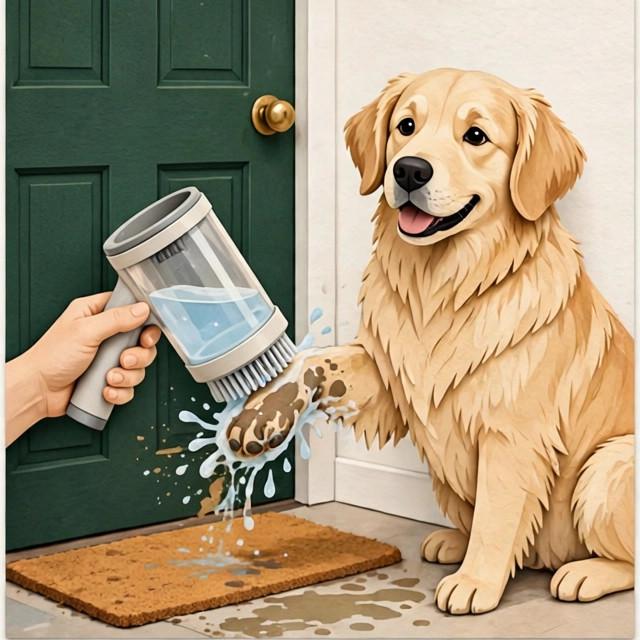
Parasites cause the same kind of licking from the inside out. Demodex mites and scabies both target the feet, hookworm larvae can penetrate paw skin from contaminated soil, and ticks hide between toes and cause focused chewing. Post-walk rinses (see home care below) wash off both allergens and chemical irritants in thirty seconds per paw — for the full routine, see our guide to cleaning muddy dog paws. And if the licking started with the first frost, read our winter guide to dog paw care in winter — road salt burns and ice packed between toes are winter classics.
Are Dry or Cracked Pads the Problem?
Dry, cracked pads can drive licking on their own, especially in winter and for dogs who walk mostly on pavement. Cold air, hot concrete, rough terrain, and chemical exposure dry pads out, and a cracked pad licks exactly like a painful wound because it essentially is one.
The fixes are environmental, not medical: skip long walks on scorching pavement (the seven-second hand test — if you can't hold the back of your hand on the ground, it's too hot for pads), rinse and dry paws in winter, and apply a wax-based paw balm before walks in the cold months. Never use human moisturisers, essential-oil products, or anything containing zinc oxide on pads.
Can Anxiety Make a Dog Lick His Paws?
Yes — stress and boredom licking is real, and it has a signature: it happens when nothing else is happening, usually when the dog is resting or alone, and the paws themselves look fine on the 60-second check. FuzzNest's rule is that anxiety licking is a diagnosis of exclusion — it is what you land on after injury, allergy, yeast, irritants, and dry pads have all been ruled out.
The behaviour starts as self-soothing and can harden into compulsion. A dog who licks the same spot for weeks can develop a lick granuloma — a raised, hairless, inflamed patch that then itches and hurts in its own right, so the dog licks it more. That loop needs veterinary help. Prevention is easier than cure, which is why the anxiety question always ends at enrichment: structured exercise, training, food puzzles, and companionship fix boredom licking far better than any product. For the wider picture, our guide to calming an anxious dog covers the vet-approved methods that actually help.
What Home Care Actually Helps With Paw Licking?
The post-walk paw rinse is the highest-value paw habit an owner can build: thirty seconds per paw in plain lukewarm water, followed by a thorough towel-dry including between the toes. It removes pollen, salt, dust, and lawn chemicals before they can do their work — and it costs nothing.
Beyond the rinse: keep nails trimmed (long nails change how the toes sit and irritate the webbing), dry feet after rain and baths rather than letting them stay damp, and wash bedding weekly if yeast is involved. To break the lick cycle while the underlying cause resolves, a cone, recovery sleeve, or properly fitted boot stops the dog making the damage worse — used as a bridge to the fix, not the fix itself.
The "do not" list is short but firm: no human creams, steroid ointments, or antiseptics without a vet's direction; no essential oils on paws; no wrapping a paw tight or for long periods (moisture breeds yeast); and never let a bored dog just keep licking — redirect to a stuffed food toy or a short training session instead.
When Should You See the Vet About Paw Licking?
See the vet this week if the licking has lasted more than a week or two despite home care, involves swelling, bleeding, a limp, a persistent lump, the corn-chip smell across multiple paws, or the skin is going raw. FuzzNest's rule: licking that is changing the skin — pinker, browner, thinner, thicker, smellier — is always worth a proper diagnosis.
Some situations are same-day vet cases: a paw that is suddenly non-weight-bearing, a torn nail bleeding freely, spreading swelling that suggests an embedded foxtail or infection, or a dog in obvious sudden pain. Everything else is a routine appointment — but still an appointment. Allergies and yeast are both highly treatable once identified, and months of itchy feet are a miserable way to live. Bring notes on when the licking started, what makes it worse, and anything you have tried — a vet with that history diagnoses in minutes what guesswork can't solve in months.
Frequently asked questions
Should I try to stop my dog licking his paws?
Stop the damage, not the communication. Redirect or block the licking (cone, boot, enrichment) while you find and fix the cause — the licking is the symptom telling you where to look.
Why does my dog only lick his paws at night?
Usually because daytime distraction is gone. The underlying cause — mild allergy itch, a low-grade irritation, or a boredom habit — is present all day; at night there is nothing else to think about.
Why are my dog's paws stained brown between the toes?
Brownish-red staining is saliva pigment from chronic licking, often with yeast adding its own colour. It's a sign the licking has been going on a while — start with the yeast section above.
Does Benadryl help with paw licking?
Antihistamines help some dogs mildly with allergy itch, but never dose by guesswork: some formulations contain xylitol, which is toxic to dogs. Ask your vet for the right product and dose for your dog's weight.
Will a lick granuloma go away on its own?
Rarely. Once the sore exists, it itches and hurts on its own terms, so the dog keeps licking it. Lick granulomas need veterinary treatment — medication and breaking the cycle — before they spread.
🎁 Your free bonus for finishing this guide
🐶 Dog Body Language & Calming Signals
Lip licks, yawns, whale eye, play bows — learn the quiet signals your dog sends before stress turns into trouble, and how to answer them calmly. Free printable PDF — keep it where you will actually use it.
Download your bonusSee all 5 free bonuses →Follow FuzzNest
Daily pet problem-solvers, happy-pet wins, and new guides.